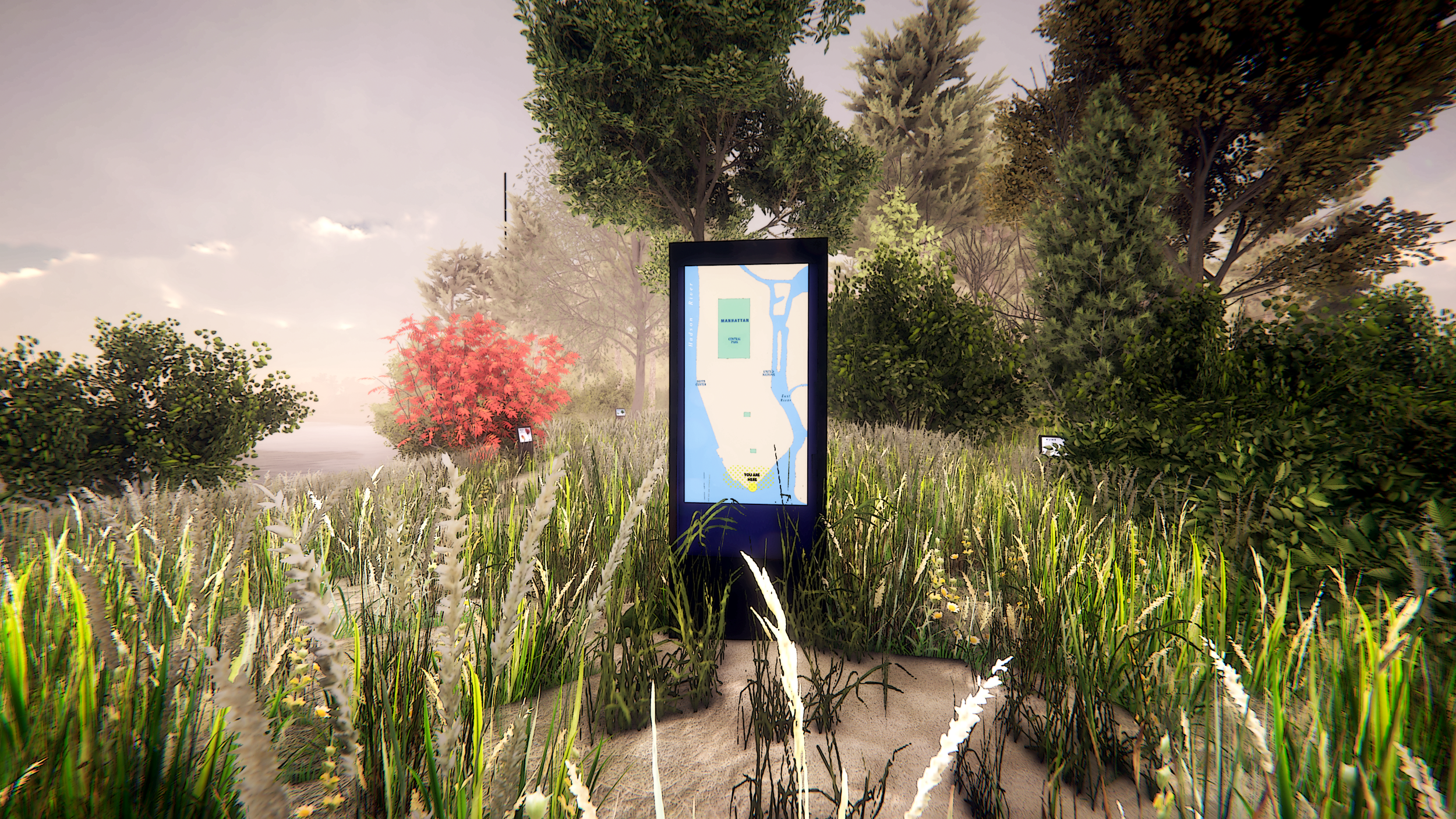
Mannahatta VR (2016-22). Long before Henry Hudson’s arrival in 1609, Manhattan or Mannahatta, as originally named by the Indigenous Lunaape/Lunaapeew/Lenape people, is a place of gathering and exchange amongst diverse nations. Nowadays, Broadway runs along a portion of the original matrix of trails that connects Mannahatta to the broader northeast region and the Great Lakes. Artist Beatrice Glow and The Wayfinding Project at the Asian/Pacific/American Institute at New York University partnered with creative technologist Alexandre Girardeau to build Mannahatta VR, an interactive virtual reality experience which brings together the past and present of one Broadway block.
This ongoing project is growing through conversations with Native culture bearers, ecologists, artists, educators and technologists. In the process, we ask ourselves how can we expand knowledge of Indigenous Manhattan? What does a sustainable Indigenous future look like? How do we ethically create a historically palpable digital storytelling experience? We approach the virtual reality experience not as a final product, but a platform for our collective envisioning that has the potential to evolve into an immersive oral history archive.
The virtual experience begins on a palpable digitally reconstructed Broadway block (8th street and Waverly Place) where the street is revealed to be part of a matrix of Indigenous pathways where plants are identified by Lenape names and the turtle, turkey and wolf clans appear as star constellations. Navigating the virtual environment, one finds a bow and arrow to shoot the Netherlands Monument that commemorates the “Purchase of Manhattan,” the misconception that the Lenape sold Manhattan to the Dutch for $24. Upon toppling the monument, Chief Mann of the Ramapough Lunaape Nation appears holographically to speak about environmental stewardship.
In 2019, the project expanded to include more oral traditions from culture bearers documented with volumetric scans. Guided by the songs of George, Brent and Xander Stonefish, members of the Turtle Clan Lunaapeew Nation in Moraviantown, Ontario, Canada who trace their homelands to New York, this latest addition invokes the layered histories of Manhattan as Mannahatta (the original name of the island). In the videos attached below, George Stonefish speaks to resilience and the power of traditional songs, and father and son Brent and Xander Stonefish sing together to give thanks to the Creator. In 2022, we created a new version of the virtual experience and made it desktop compatible. Scroll down the page to access it.
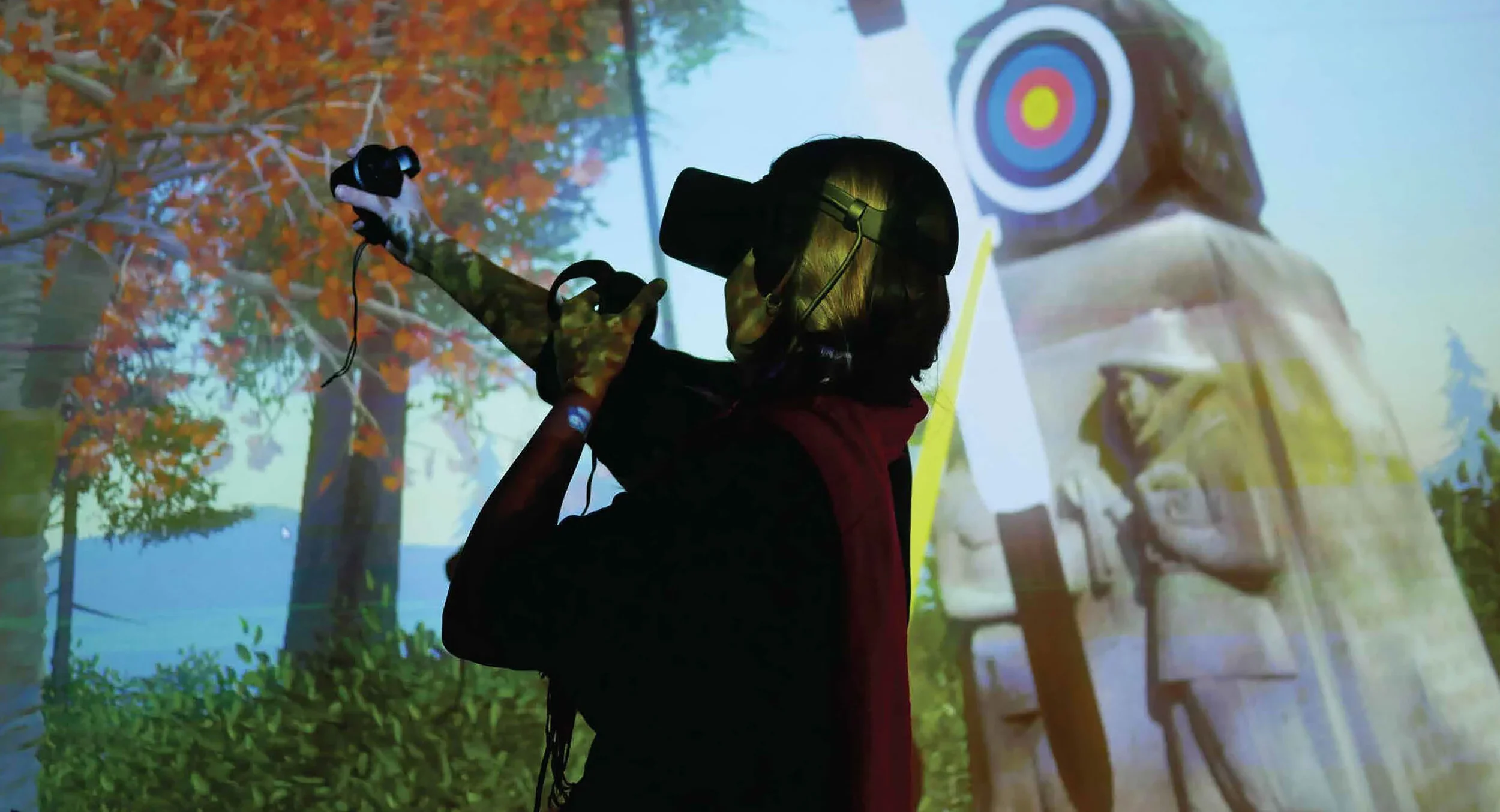
This photo has been taken during a screening of the virtual reality (VR) experience Mannahatta VR at the “Looking Back | Looking Forward: Culture in a Changing America” symposium at the Park Avenue Armory, New York (02/17/2018). Here, the audience member is using virtual archery to shoot down a 3D reconstruction of the “Netherlands Monument,” a flagstaff located in Battery Park that commemorates the myth of the “Purchase of Manhattan.” This VR demo was room-scale and took place within an installation consisting of video projections, sculptural and olfactory elements.
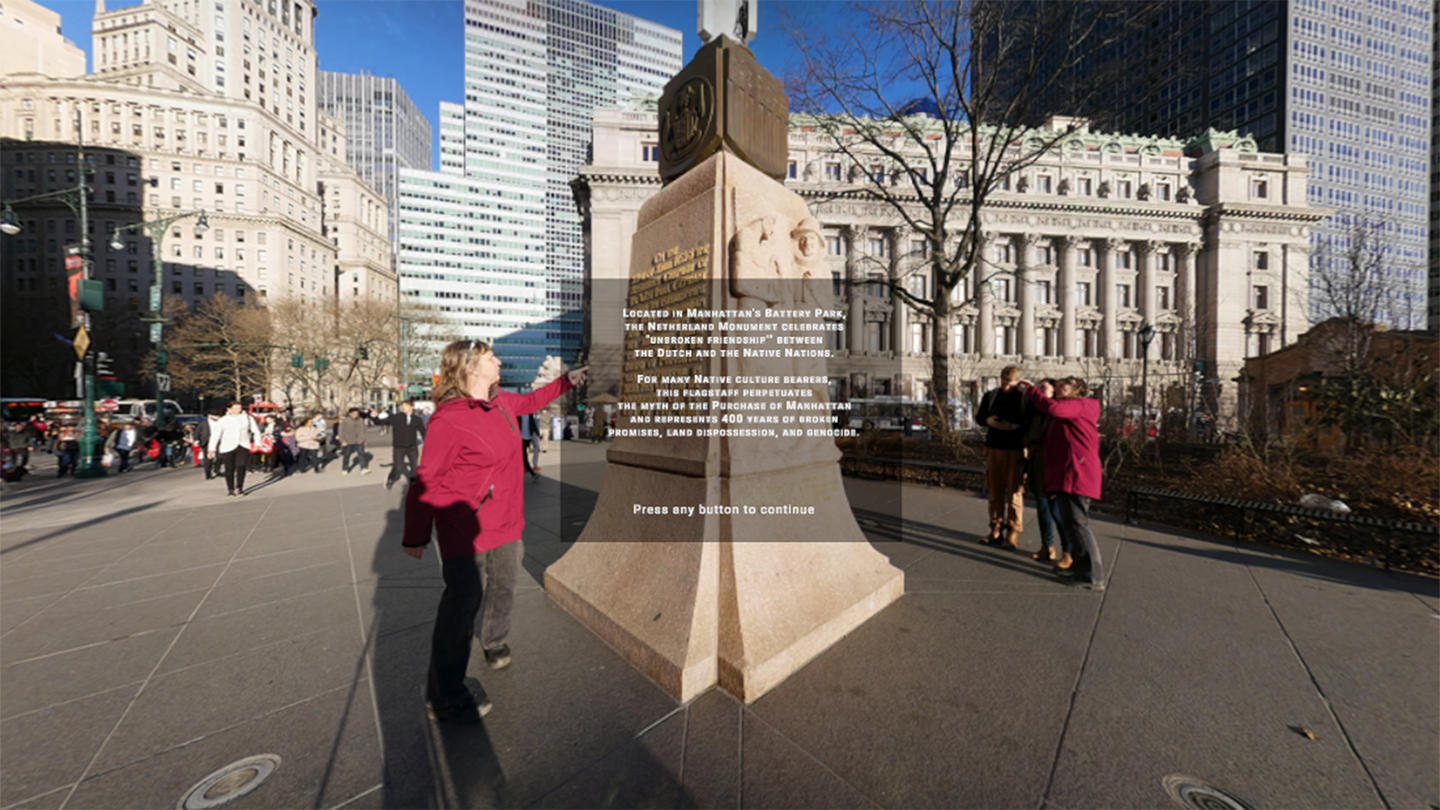
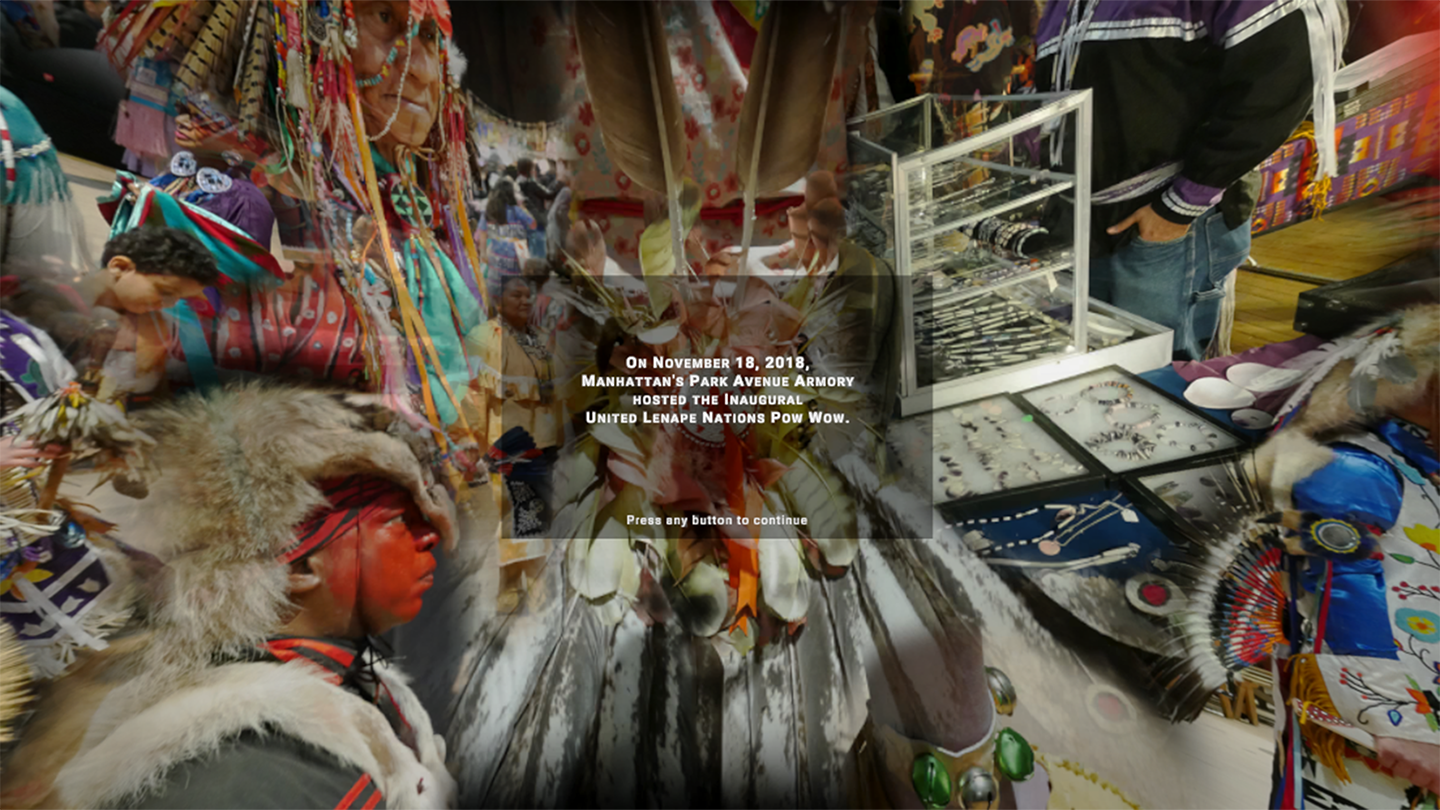
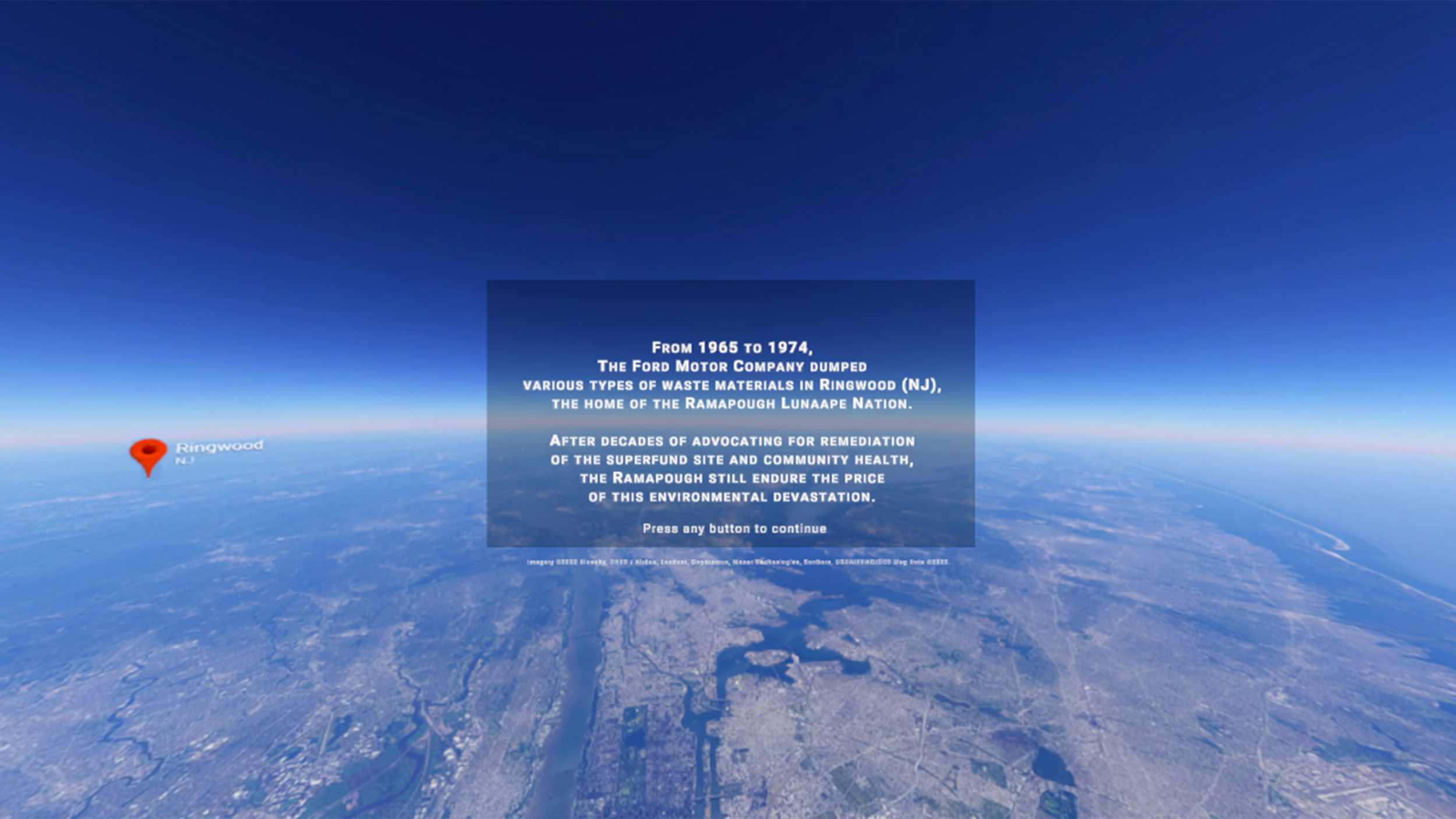
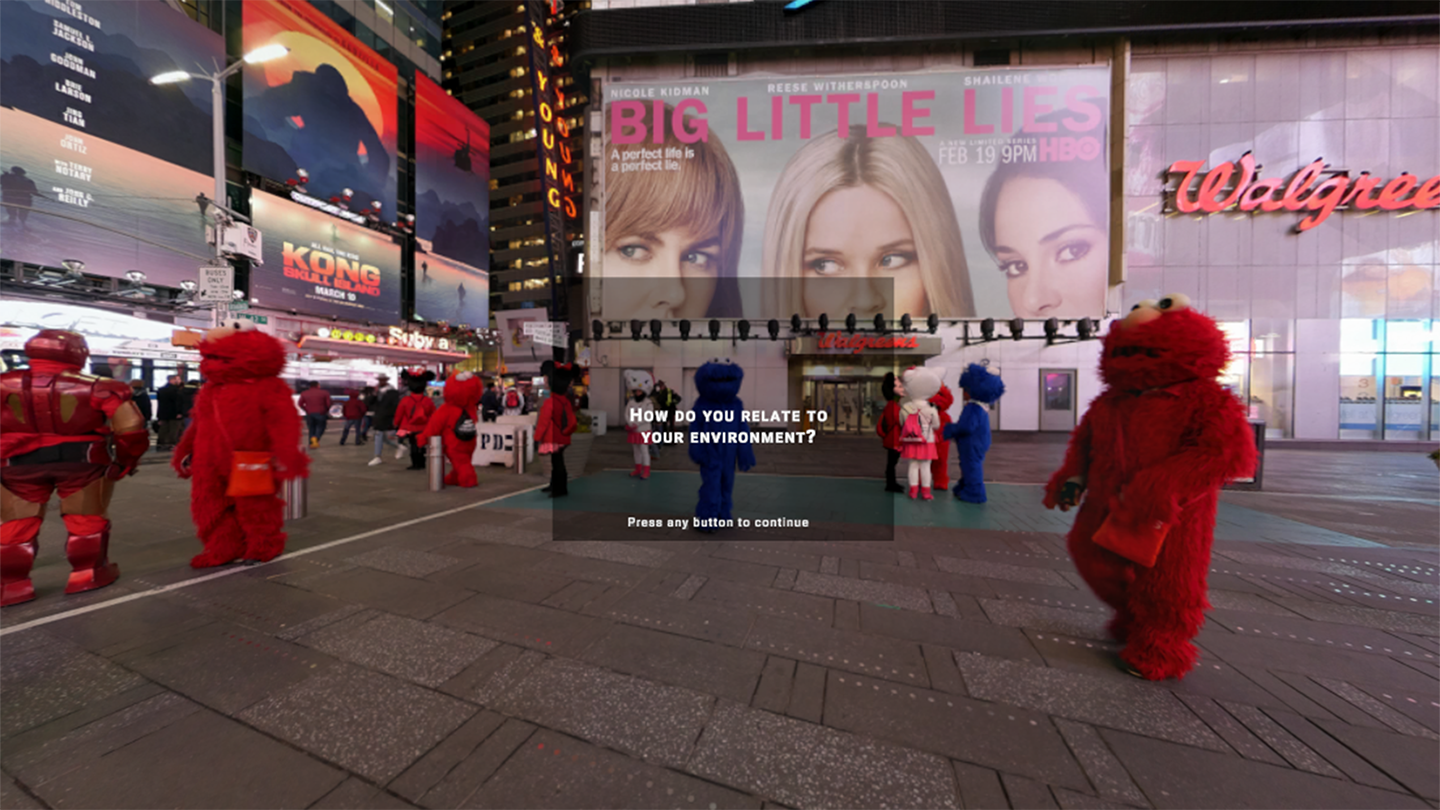
Screenshots and video excerpts from early iterations:
Mannahatta VR: George Stonefish, 2019, animation created from an interactive virtual reality experience
Mannahatta VR: Brent and Xander Stonefish, 2019, animation created from an interactive virtual reality experience
In 2022, we created a new version of Mannahatta VR compatible with latest virtual reality headsets (Oculus Quest 2) as well as desktop mode.
Preview the virtual experience by pressing the button below. Click and hold the mouse to move through the 360-degree environment.
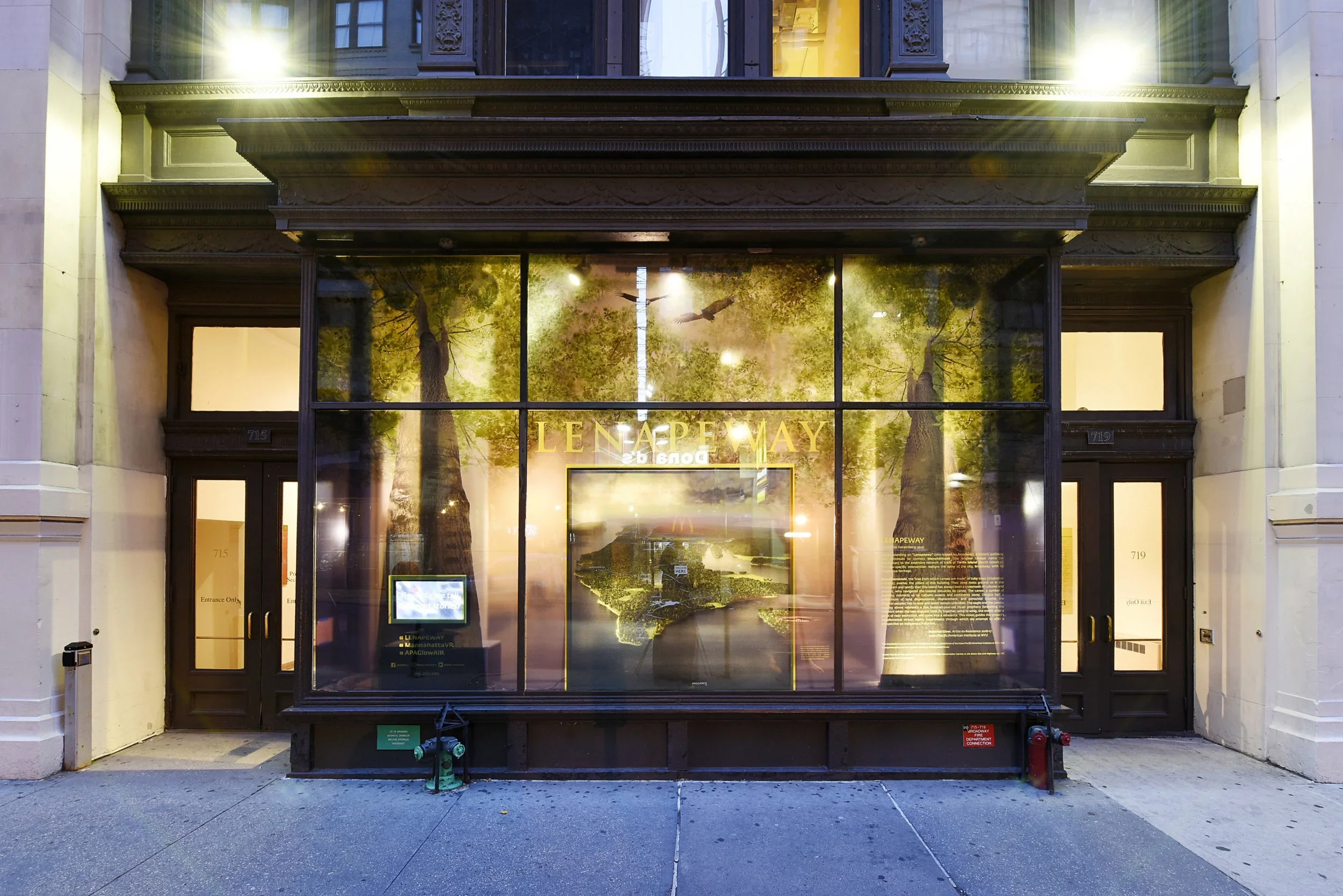
Mannahatta VR is a supplement to Lenapeway, an installation that was on 24-hour view in the street-level windows of 715 Broadway (at Washington Place) from October 10, 2016 (Indigenous Peoples’ Day) to December 9, 2016. The location of the installation, which was viewable from the sidewalk 24/7 and was cosponsored by NYU’s Gallatin School of Individualized Study and the A/P/A Institute, marks the intersection of the main Lenape trail and a side-trail that traverses through present-day Washington Square Park.