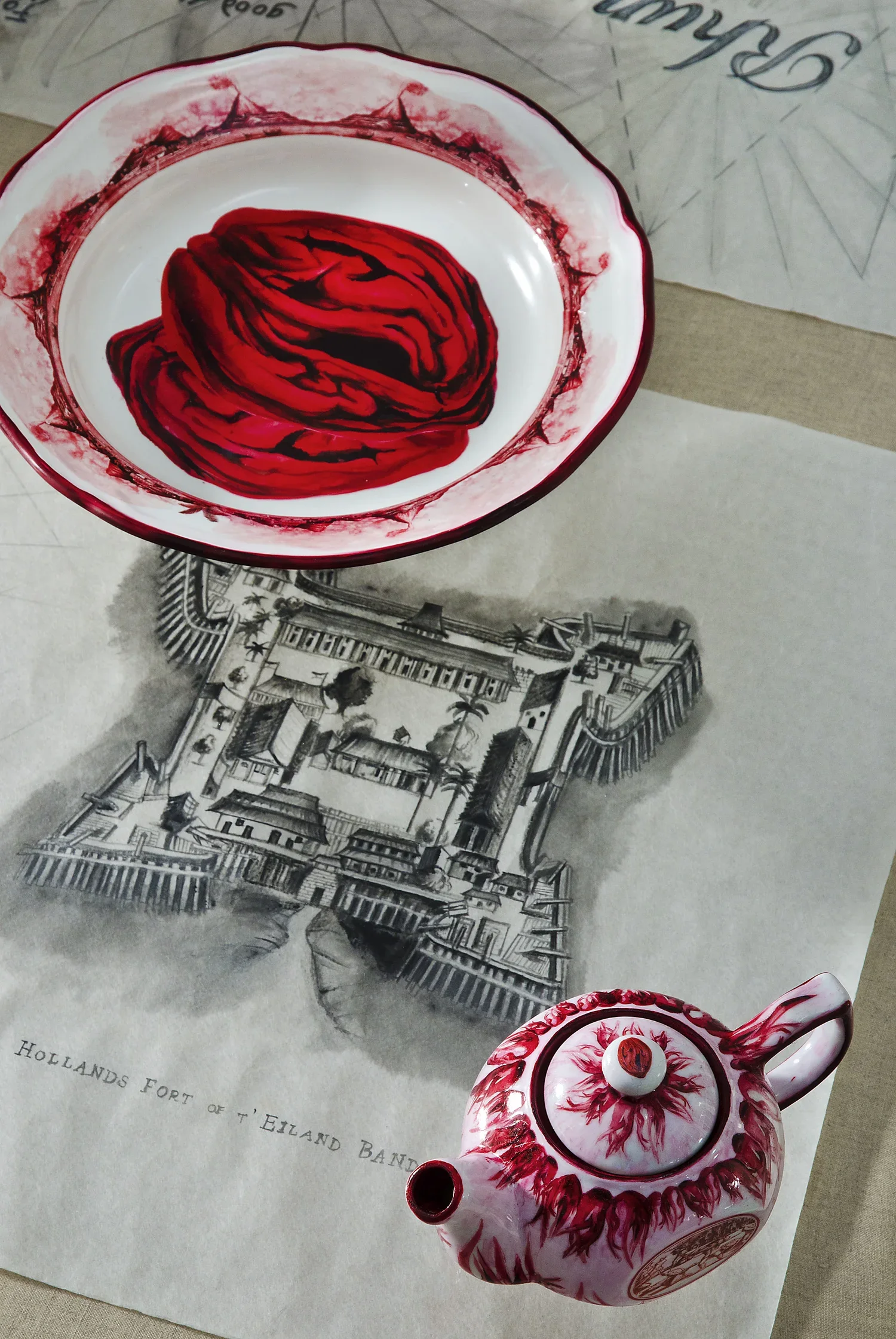
Rhunhattan Tearoom (2015): For Rhunhattan Tearoom, which was first shown at Wave Hill, I created a Delftware teaset imbued with colonial narratives, cartographic drawings of Rhun and Manhattan, and scents of colonial conflict in Wave Hill’s Sun Porch to create a tearoom with sights and scents that reference the Spice Trade during the Age of Discovery. My intention was to evoke a macabre tearoom that, similar to a blood diamond, is distractingly glossy yet fails to cover the stench of greed, the social costs of exploitation and historical erasure.
I drew nutmeg at its various stages of growth, researched archival images of colonial architecture and Spice War atrocities, printed them as decals, and collaged them onto found porcelain that were made in Asia and exported to the US. I drew with Colonial Brick (red), Taboo (black) and Nutmeg (brown). Terracotta clay form nutmegs were scented with peppery notes inspired by colonial commerce. Below the vitrines are cartographic ink drawings of Rhun and Manhattan. Some of the plates depict a ripe nutmeg still enveloped in mace, its "placenta," other tableware depict Spice War atrocities. The border of the plates depict volcanic imageries as first seen by European traders when approaching the islands.
Rhunhattan [Tearoom] September is on view 15-October 25th, 2015 in the Sunroom Project Space, Wave Hill Public Garden and Cultural Center, Bronx, NY
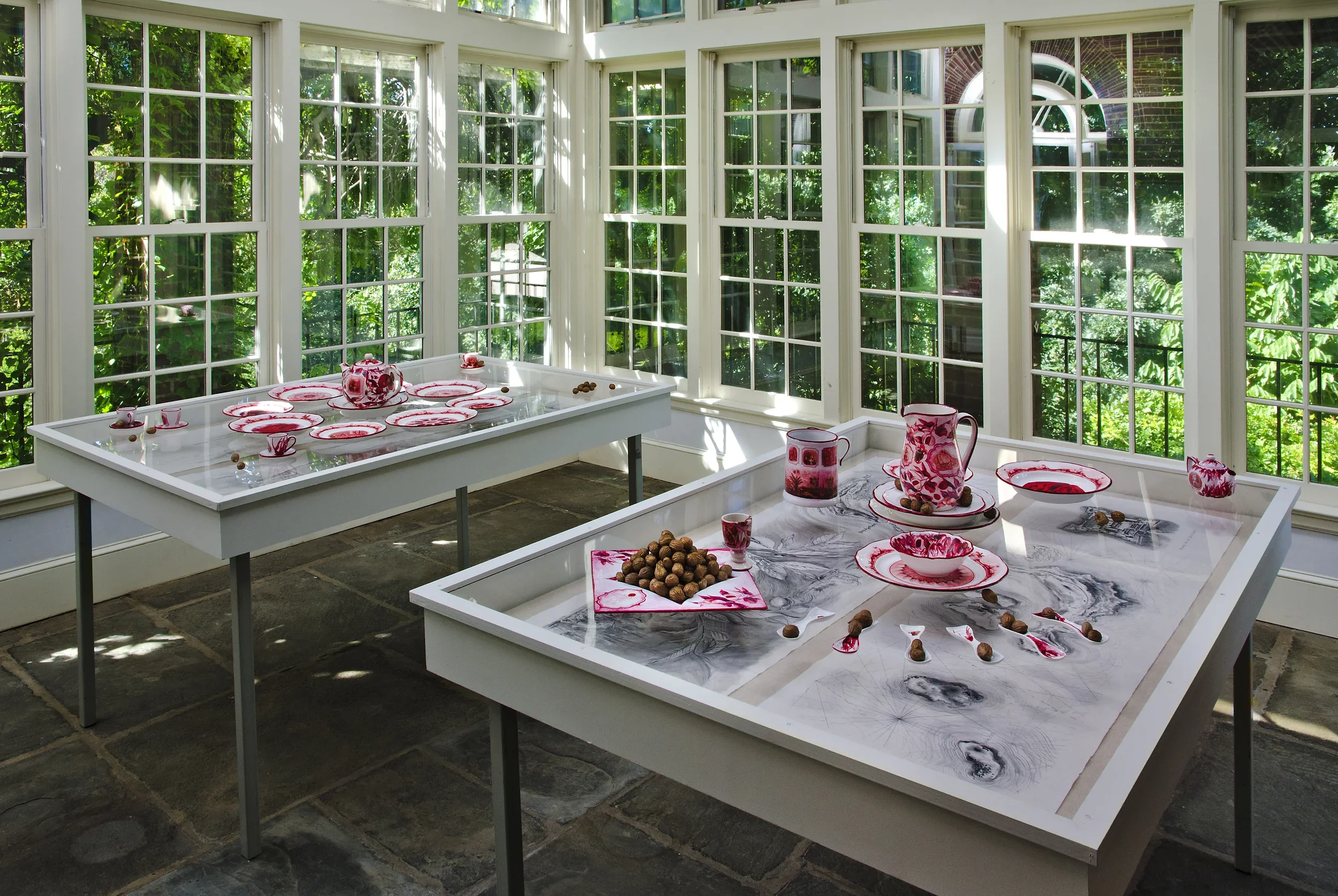
"Glow’s installation, Rhunhattan, converts the Sun Porch into a tearoom with sights and scents that reference the Spice Trade, which ushered in an era of globalization. Glow seeks to evoke the history of a land exchange that took place in 1667, when the Dutch, eager to monopolize the Spice Islands, swapped Manhattan for Rhun, an island seven times smaller, which had been held by the English. Today, Manhattan is a financial capital, while Rhun, located in what is present-day Indonesia, has faded into obscurity. Inspired by Wave Hill’s greenhouses—spaces Glow sees as designed to tame otherworldly tropical plants—the artist creates an analogous structure, approaching “the Sun Porch as a pristine tearoom that attempts to contain the insanity, greed and desire of commerce.”
Intended to reflect the erasure of colonial histories, the space includes olfactory pieces that exude sweet and pungent scents from objects interspersed throughout the installation. On exhibit are dishes decorated with depictions of the atrocities that took place in Rhun at the hands of European traders, as well as cartographical drawings and archival imagery relating to this freighted history. The design of the dishes alludes to the history of exportation from Asia to Europe, specifically Delftware, tin-glazed, blue and white pottery made in the Netherlands; Delftware developed in the 17th century with the influence of Chinese porcelain when Dutch potters began imitating the popular style of this luxury Asian import. By creating this sensory feast, Glow invites viewers to engage with the dark realities underpinning the gilded tearoom."
Gabriel de Guzman, Curator of Visual Arts at Wave Hill
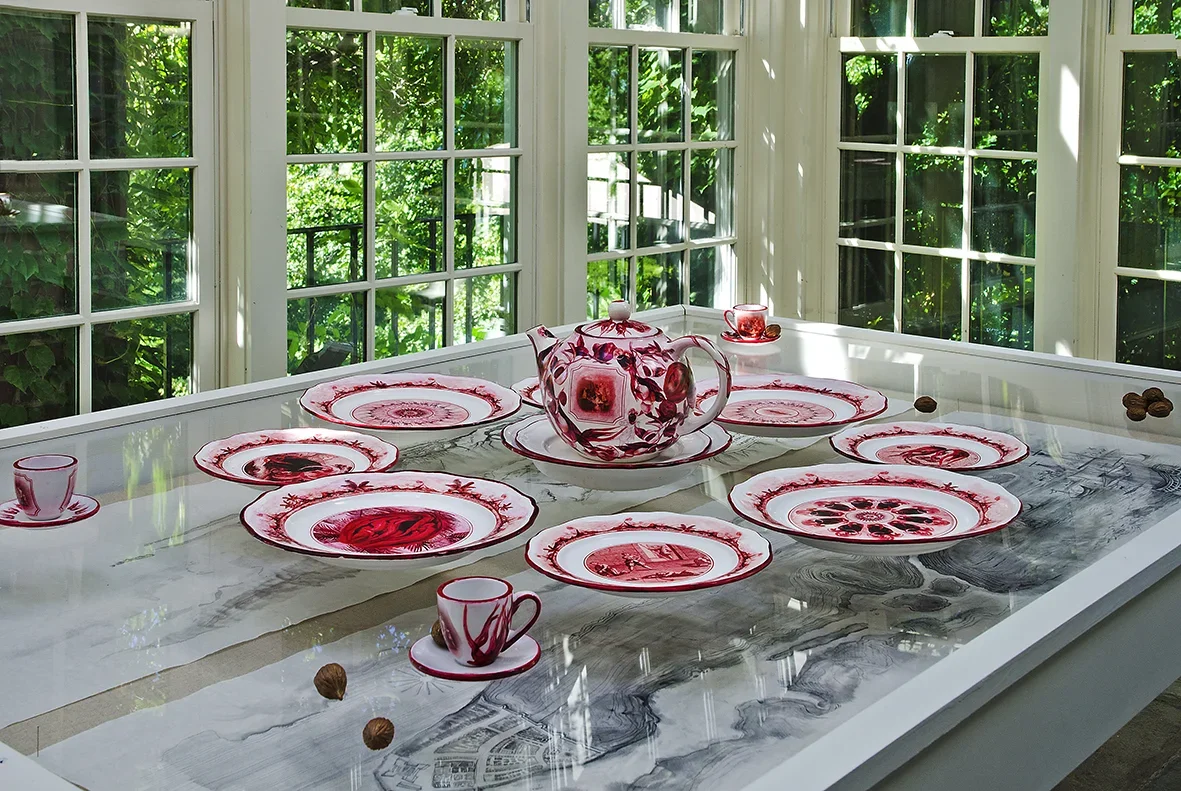
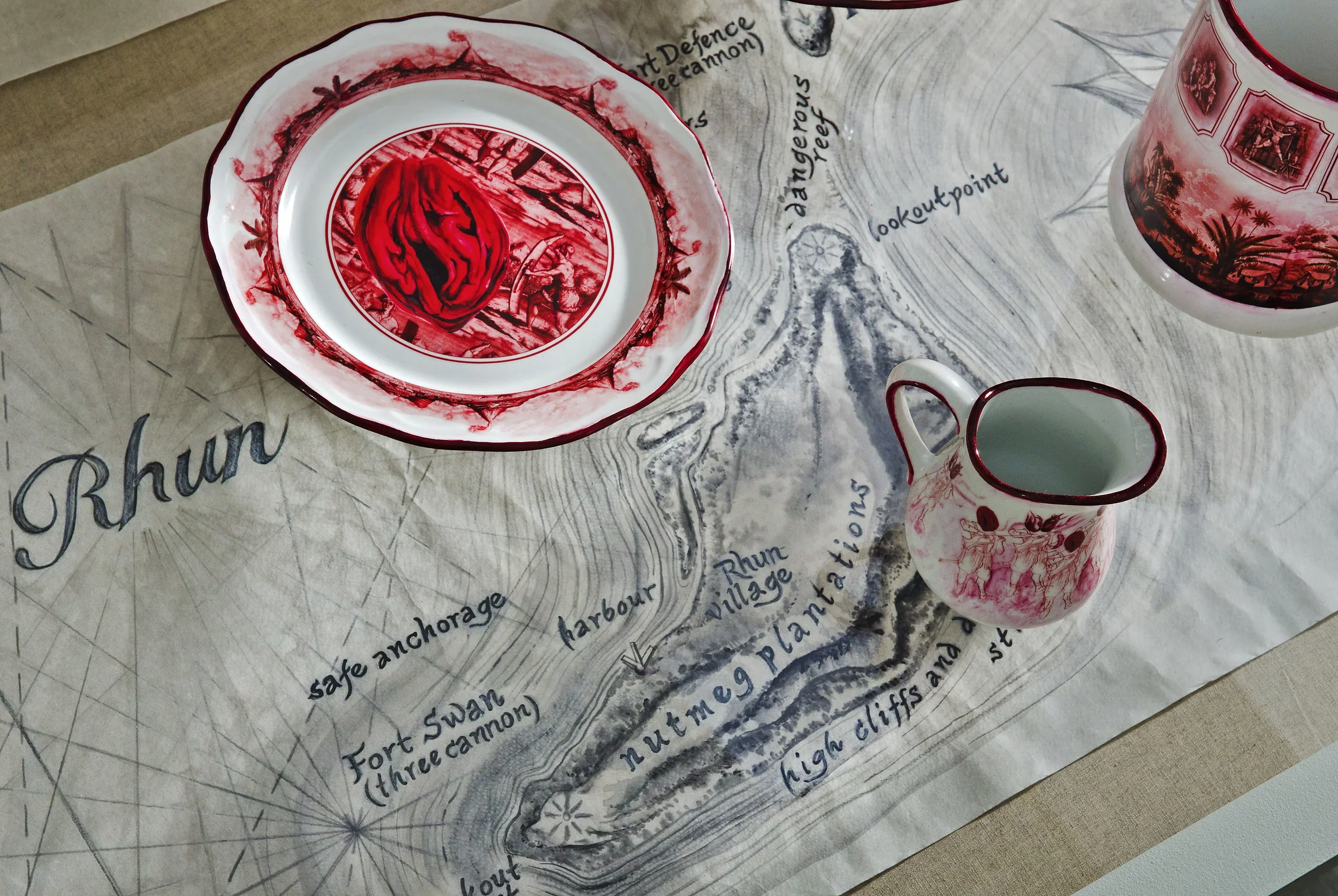
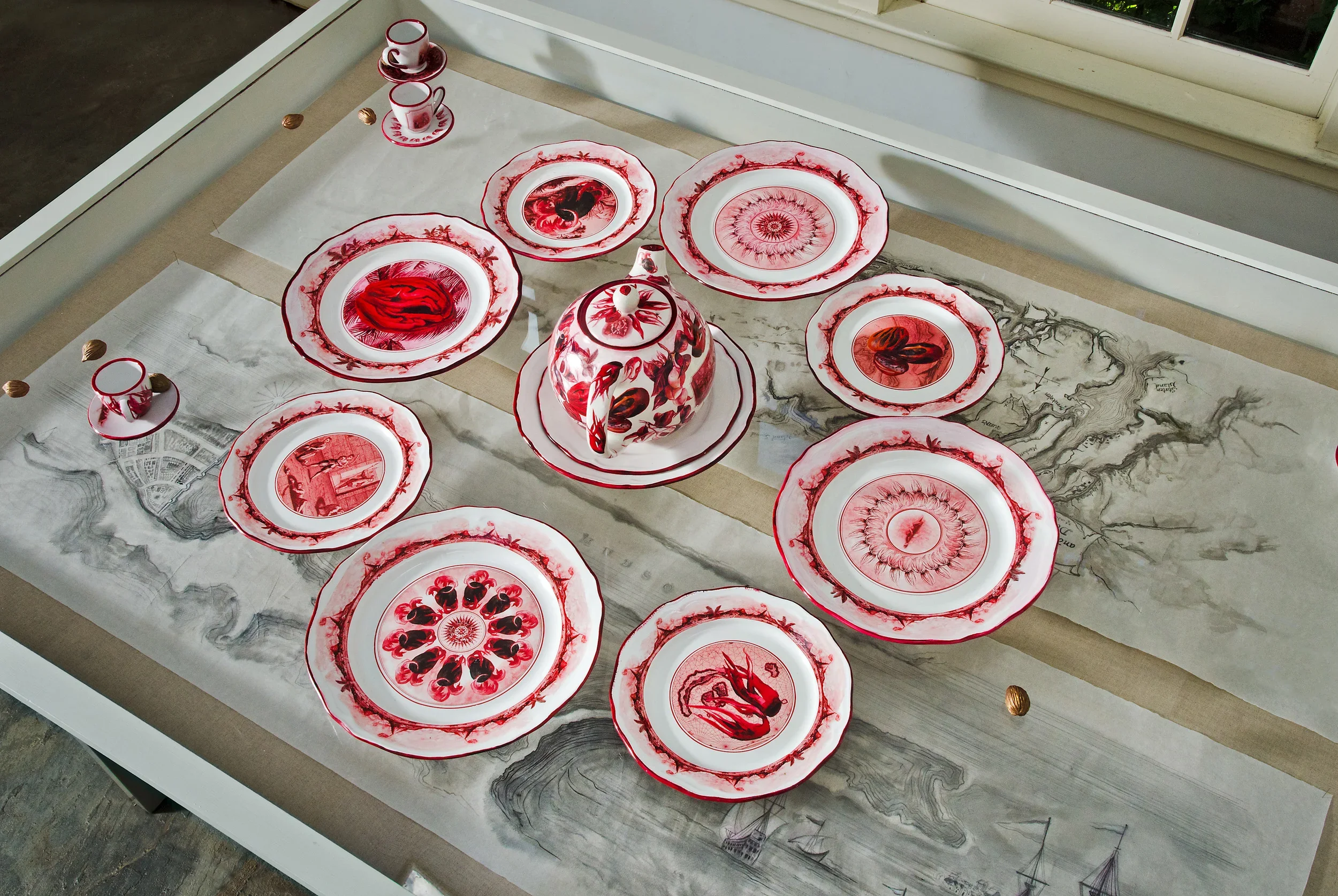
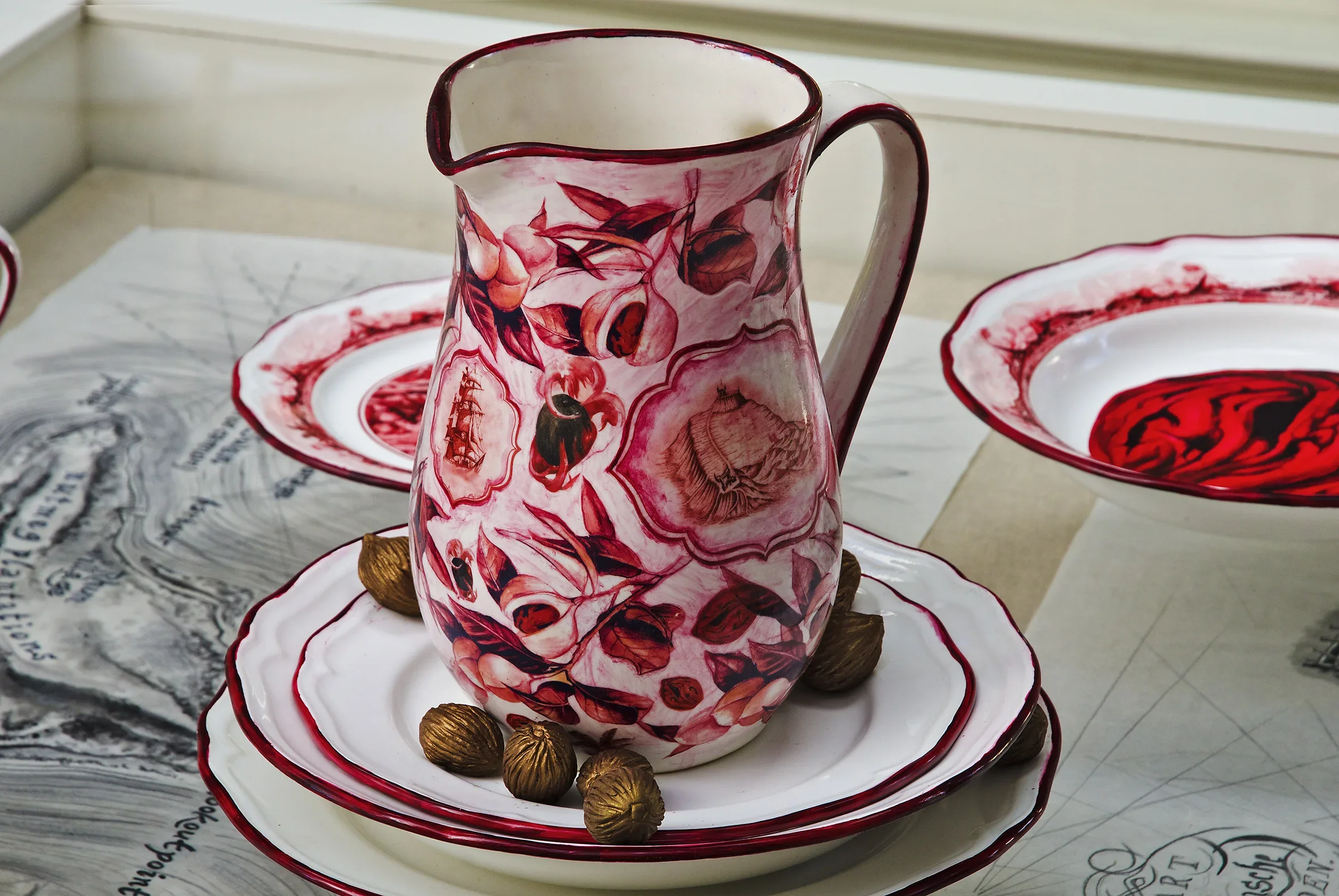
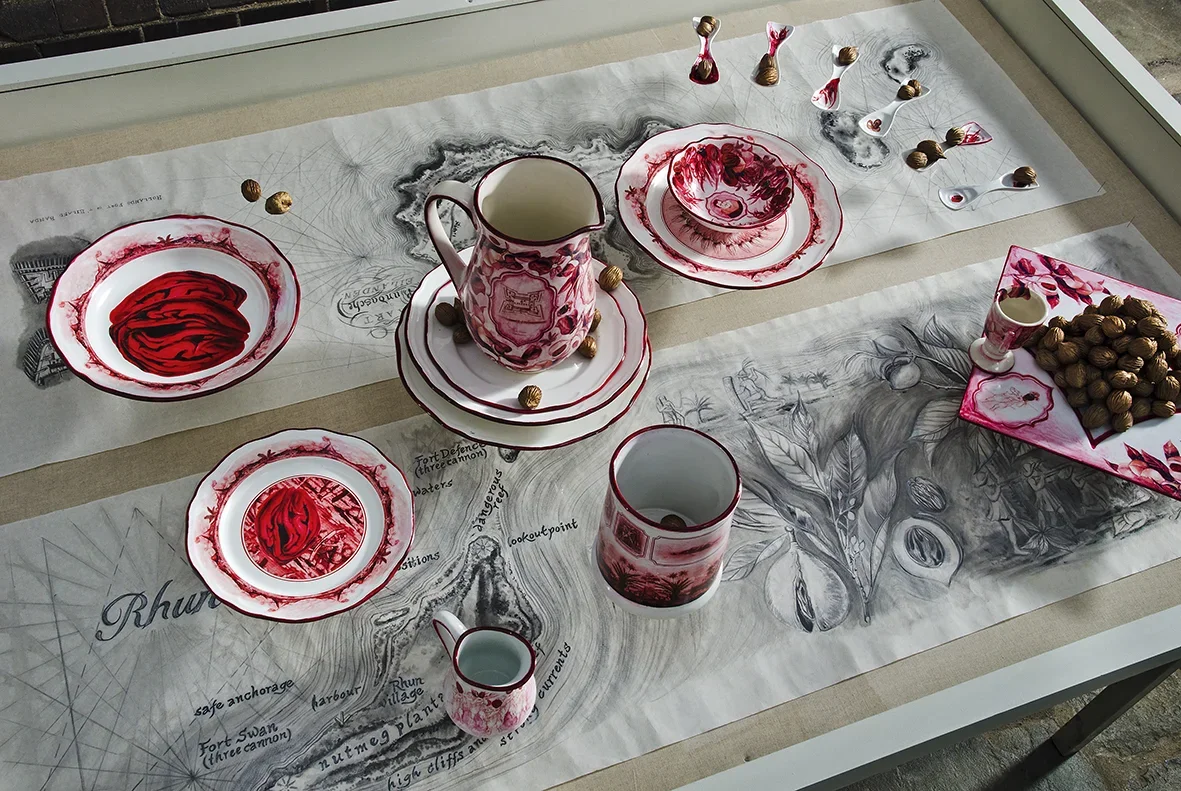
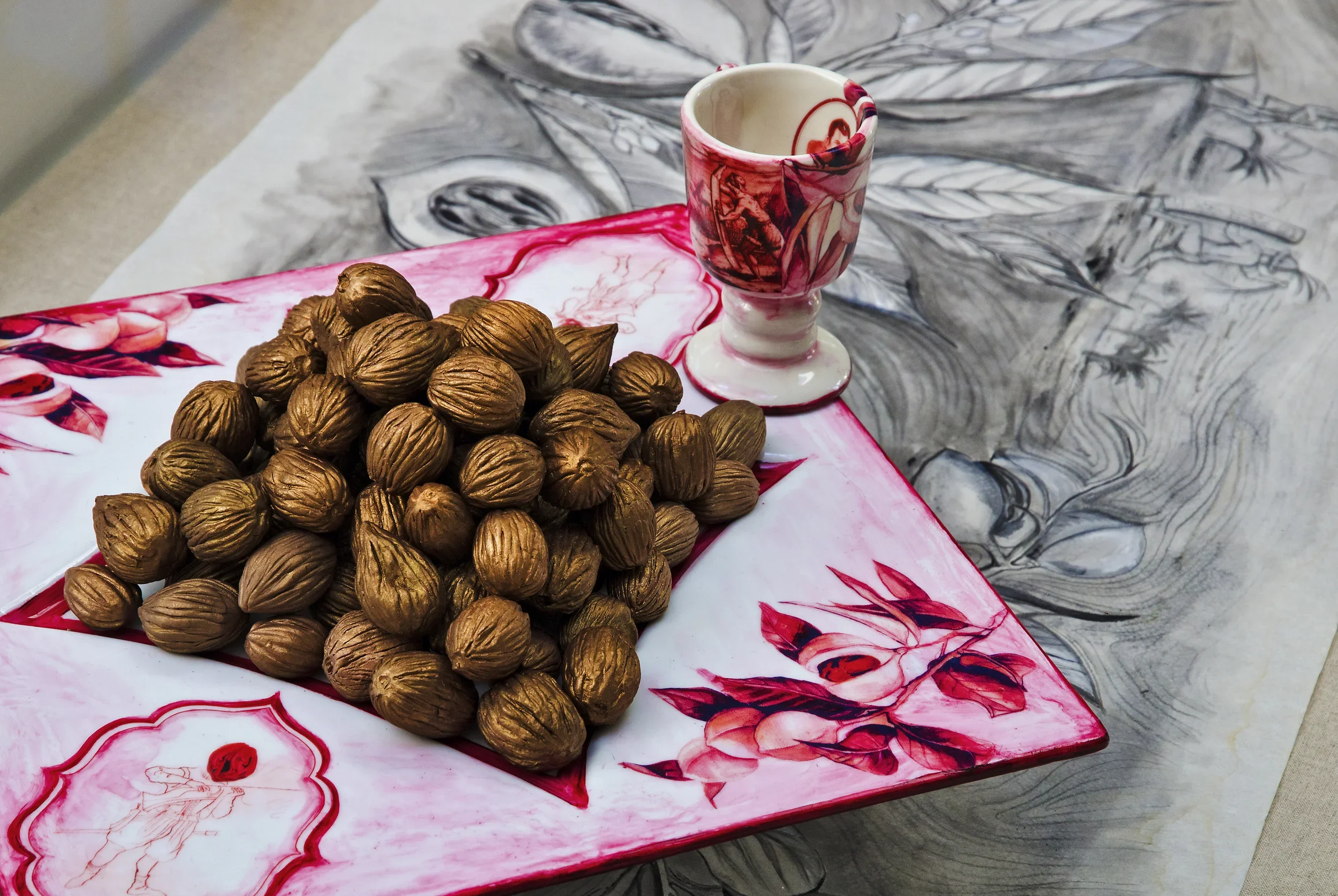
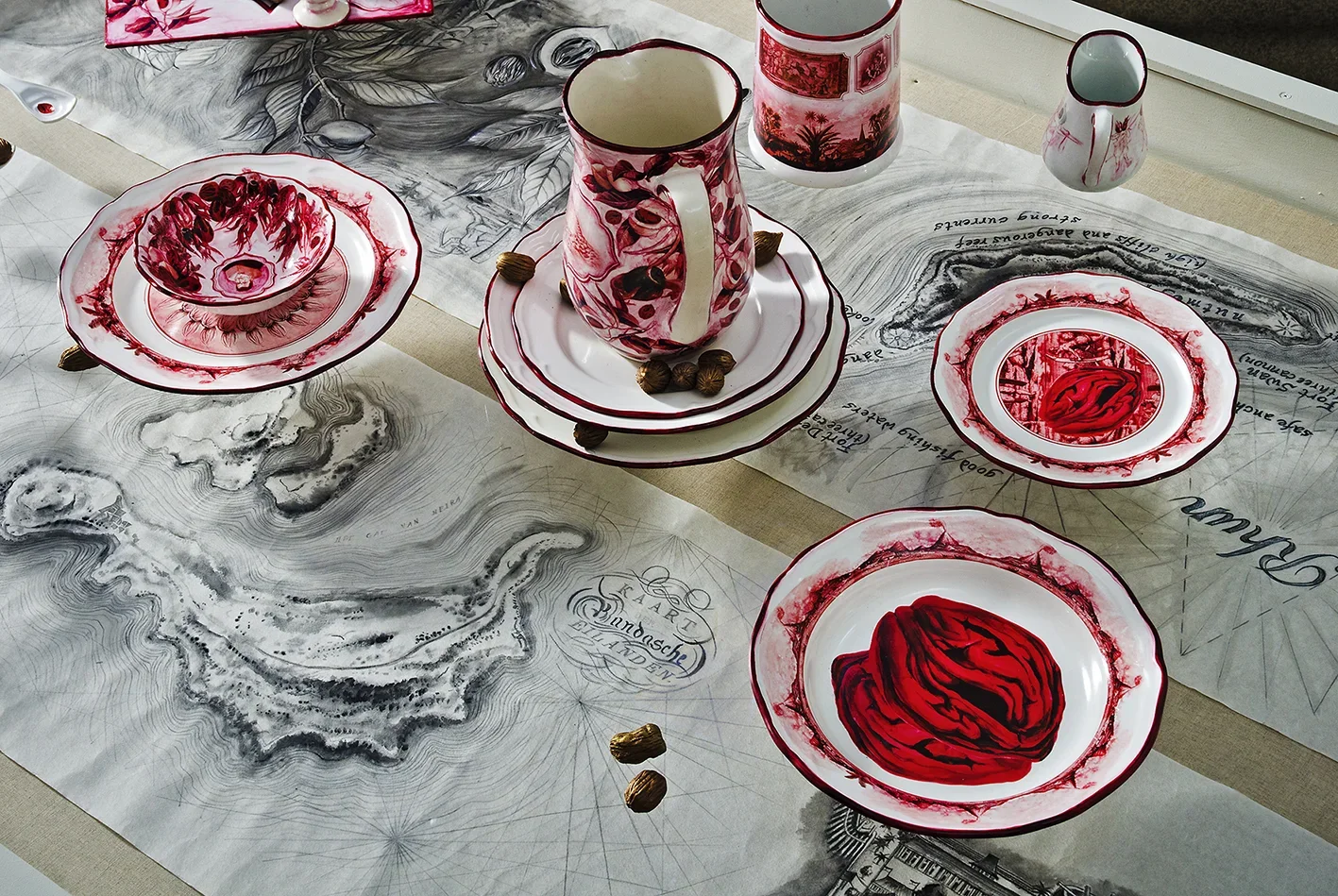
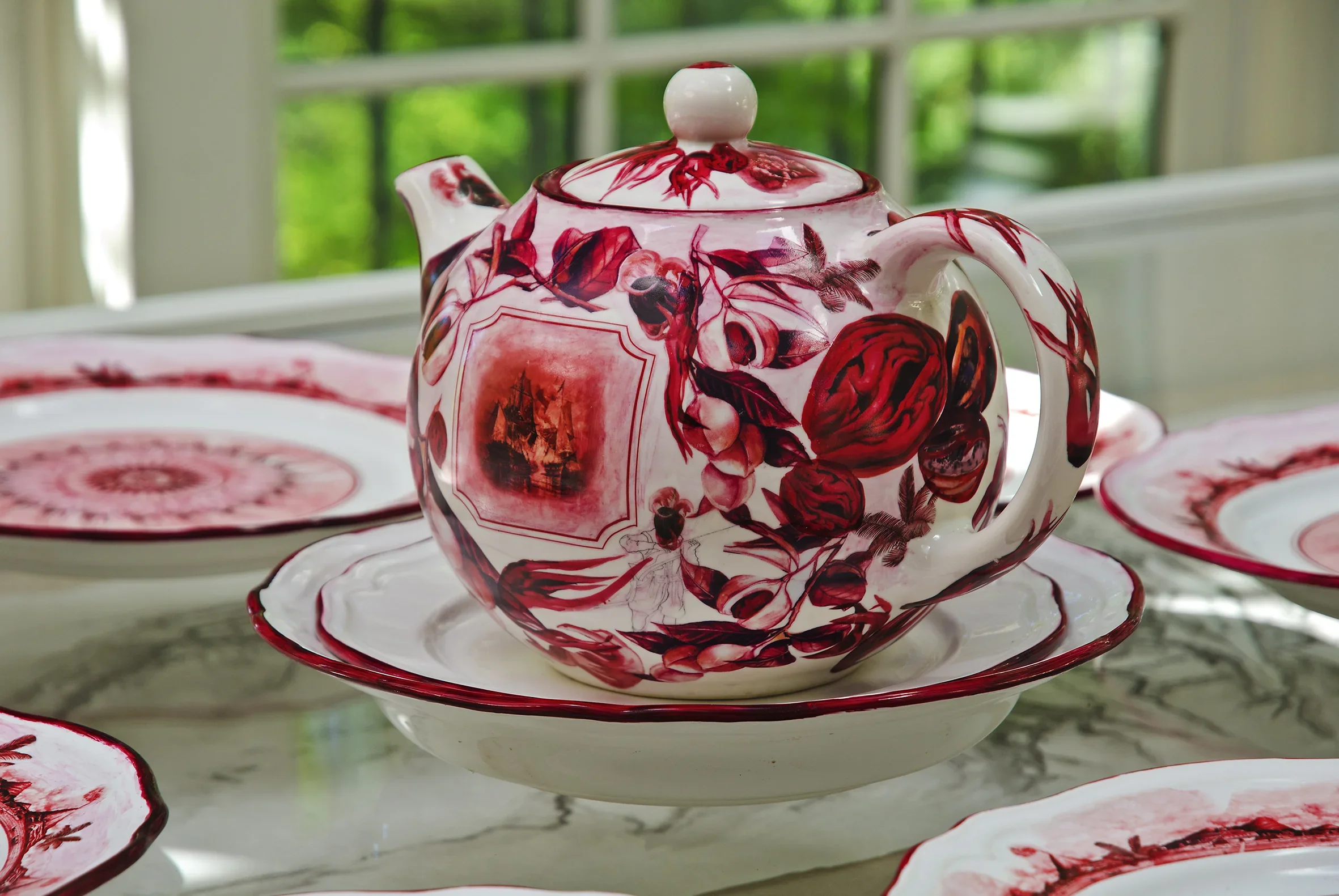
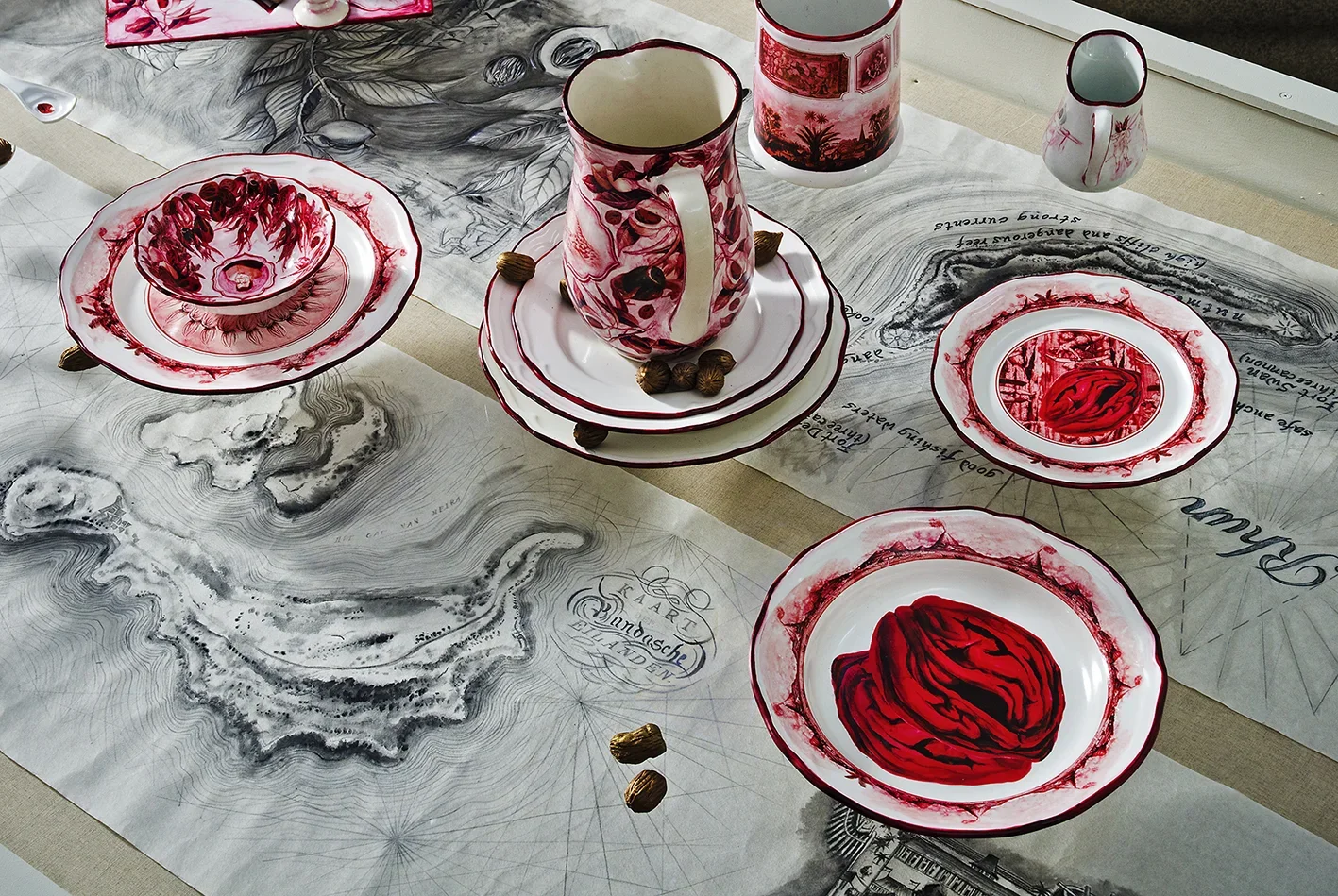
Above: Rhunhattan Tearoom installation, Acrylic and decal collage on ceramics, ink on paper, terracotta infused with scents of colonial commerce // Dimensions variable
Below: Cartographic Series, Ink on "Skin" paper, 18" x 60", 2015
![Cartographic Series created for the Rhunhattan [Tearoom] installation at Wave Hill, Bronx, New York. Ink on "Skin" paper, 18" x 60", 2015](https://images.squarespace-cdn.com/content/v1/6ac94ebd448cee2bfd20ef43/eaaaca30-e1c3-4fc2-b628-949330bdbef9/Rhun.webp)
![Cartographic Series created for the Rhunhattan [Tearoom] installation at Wave Hill, Bronx, New York. Ink on "Skin" paper, 18" x 60", 2015](https://images.squarespace-cdn.com/content/v1/6ac94ebd448cee2bfd20ef43/13d16550-4919-417d-ac27-a83250a386f6/Manhattan.webp)
![Cartographic Series created for the Rhunhattan [Tearoom] installation at Wave Hill, Bronx, New York. Ink on "Skin" paper, 18" x 60", 2015](https://images.squarespace-cdn.com/content/v1/6ac94ebd448cee2bfd20ef43/3220a306-7e16-410e-b67d-5e360d7b187c/Manhattan_Environs_Dutch_Period.webp)
![Cartographic Series created for the Rhunhattan [Tearoom] installation at Wave Hill, Bronx, New York. Ink on "Skin" paper, 18" x 60", 2015](https://images.squarespace-cdn.com/content/v1/6ac94ebd448cee2bfd20ef43/bebf4c44-eb33-4578-8dcf-c4a9659b9b0e/Banda_Sea_Fort_Nassau.webp)
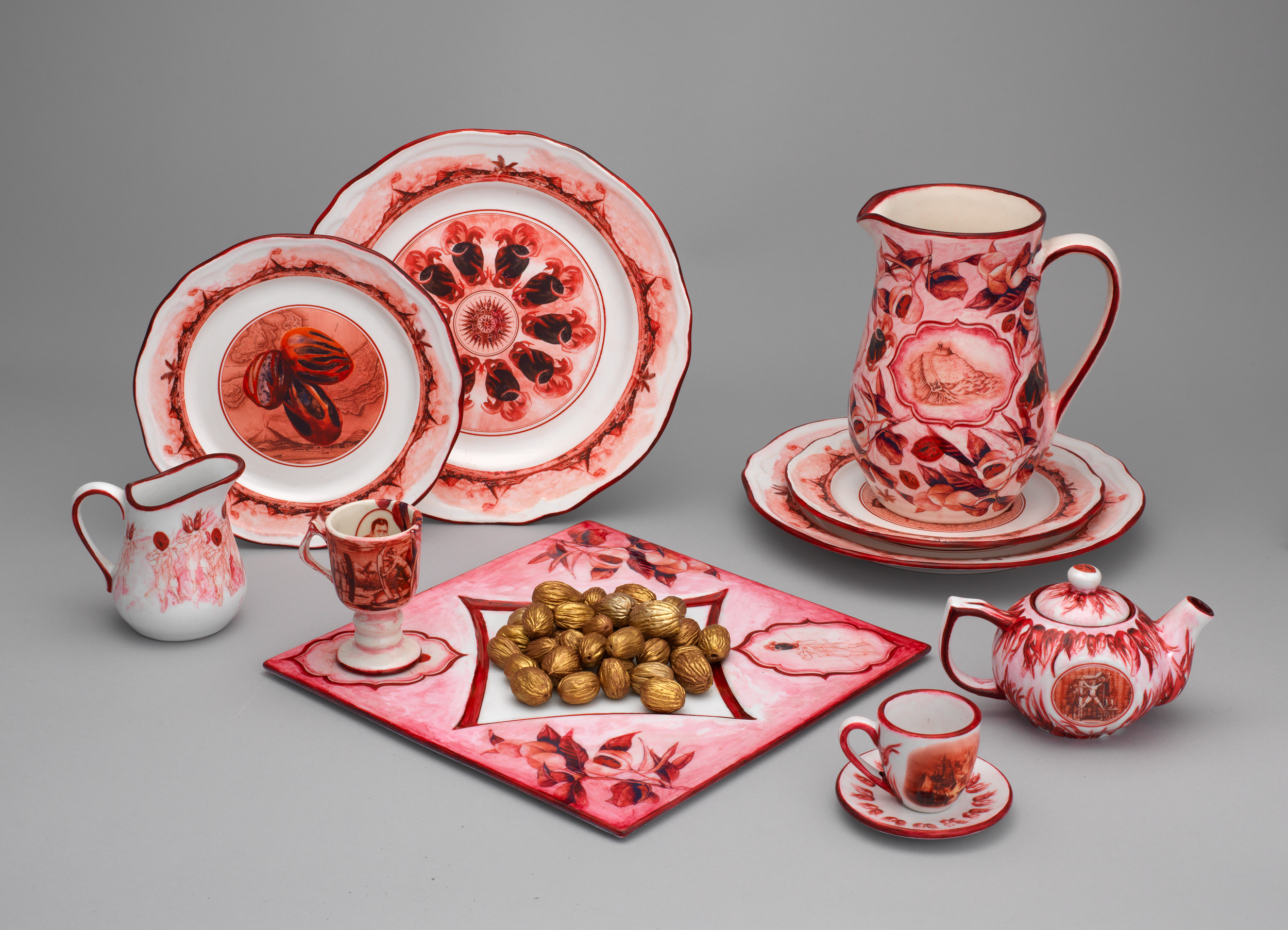
Photo: Bruce White
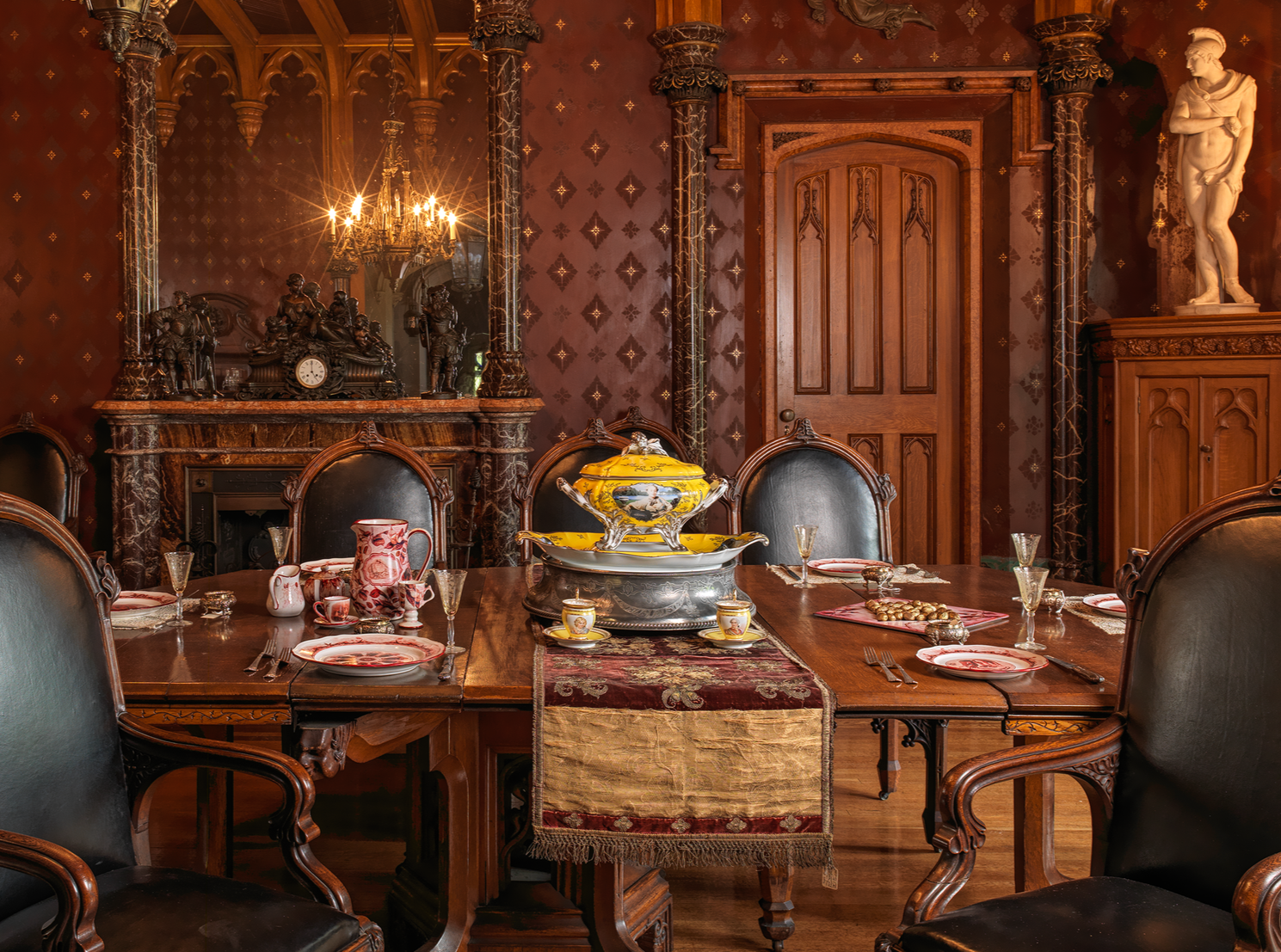
Installation view of the Women's Work (2022) group exhibition at Lyndhurst Mansion, Tarrytown, NY featuring Cindy Sherman’s Madame de Pompadour (née Poisson), 1990, porcelain soup tureen and platter, Beatrice Glow's Rhunhattan Tearoom, 2015, and 19th century Sèvres coffee cups from the Lyndhurst collection.
Photo: Bruce White